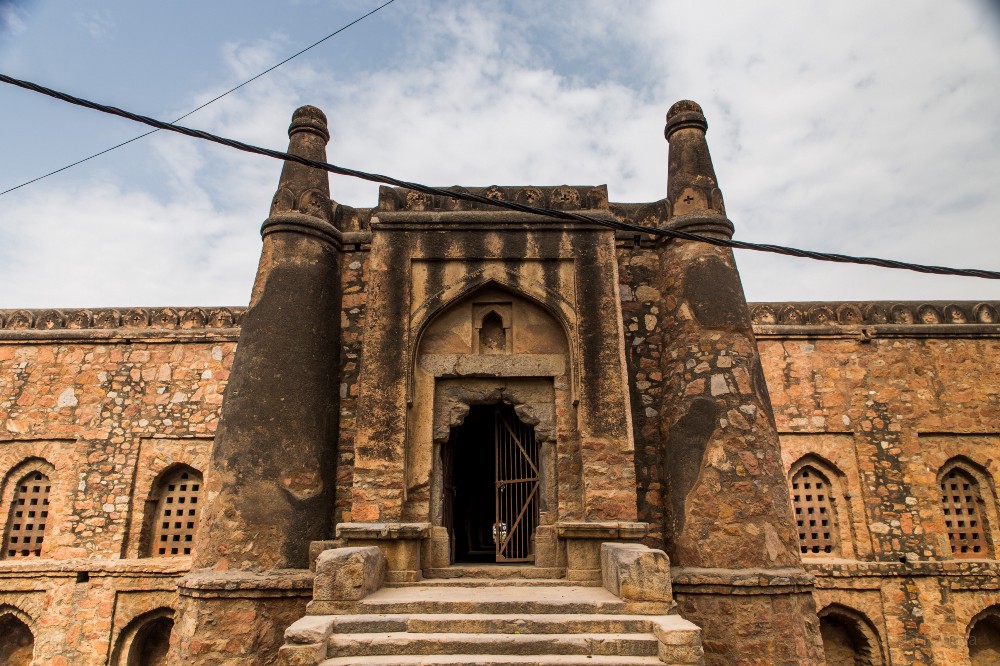
 The Khirki Masjid standing tall as the time passes by
We started our walk from Satpula lake district park. Though, there are no remains of water as of now, as it stands, the lake waits for the next rains to happen. Until then, it is the favorite spot for the local kids to play cricket. The lake was made in the 14th century by building a dam on a nullah connecting Yamuna river for irrigation purposes. The word ‘Satpula’ means ‘a bridge with 7 arches’, depicting the dam created for this purpose.
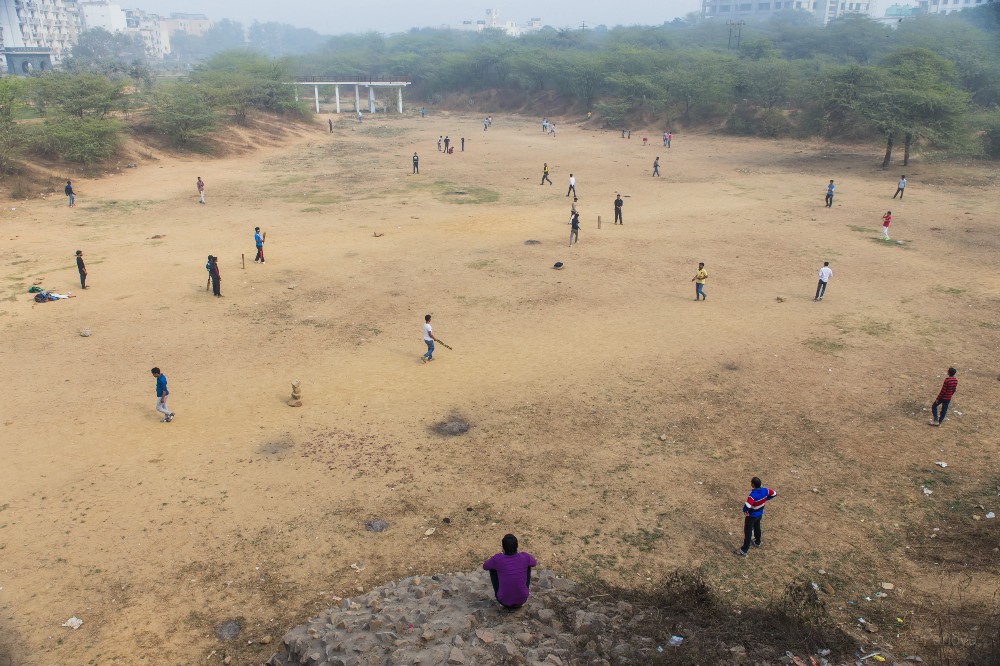 A spectator watches a cricket match sitting on the monumental ruins. The lake acts as a cricket ground for the local boys while it is empty.
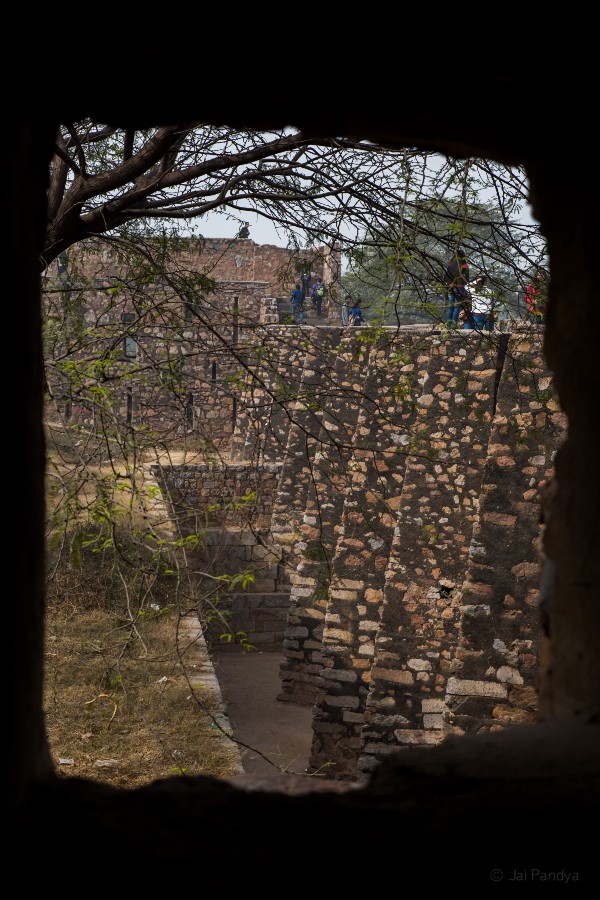
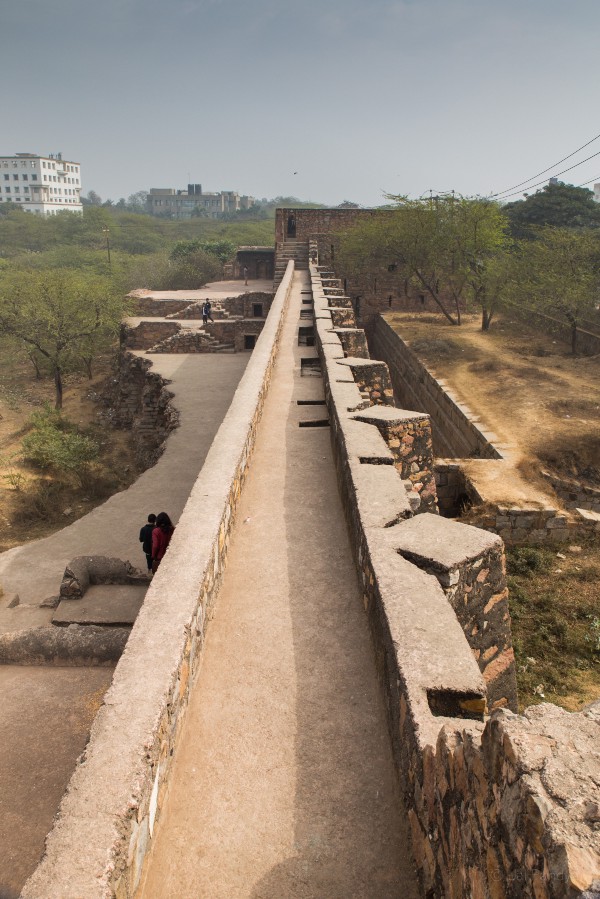 The Satpula Dam, a bridge with 7 arches
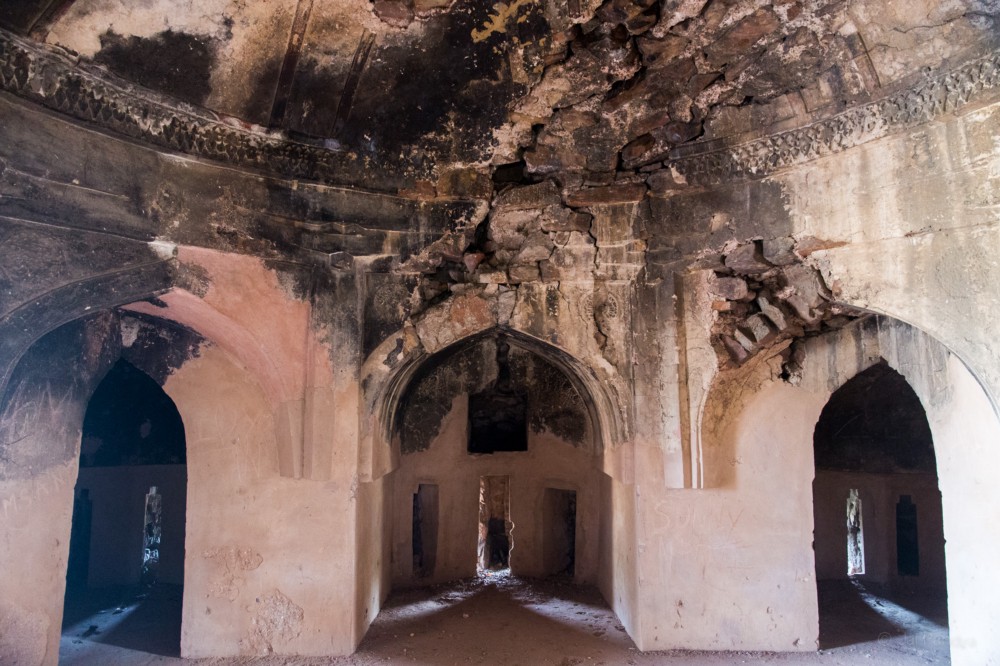 One of the chambers on the dam wall. Obviously, they need to be conserved well which doesn’t seem to be happening.
While it happens to be a protected monument by ASI, the condition is alike most other ignored historical monuments of Delhi. The moment I entered the Masjid, I could hear cries of the bats who had created their colonies in the domes. At the same time, symmetry in the architecture was very impressive. The Masjid, which is in a quadrangular shape, was built as a fortress with an unusual fusion of Islamic and traditional Hindu architecture. Domes and domes, one after another, separated by a few courtyards. It is said to be the only mosque in North India, which is mostly covered.
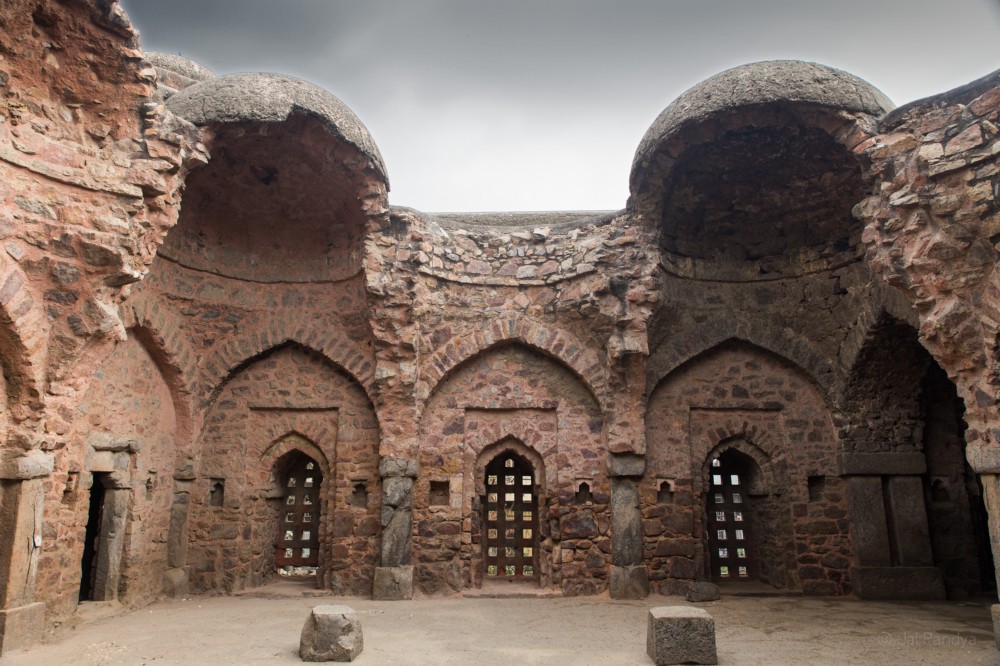 An open chamber in Khirki Masjid. It seemed to have fallen off sometime back. The bats on the walls are slowly eating the limestone of the walls which in turn weakens the monument structure.
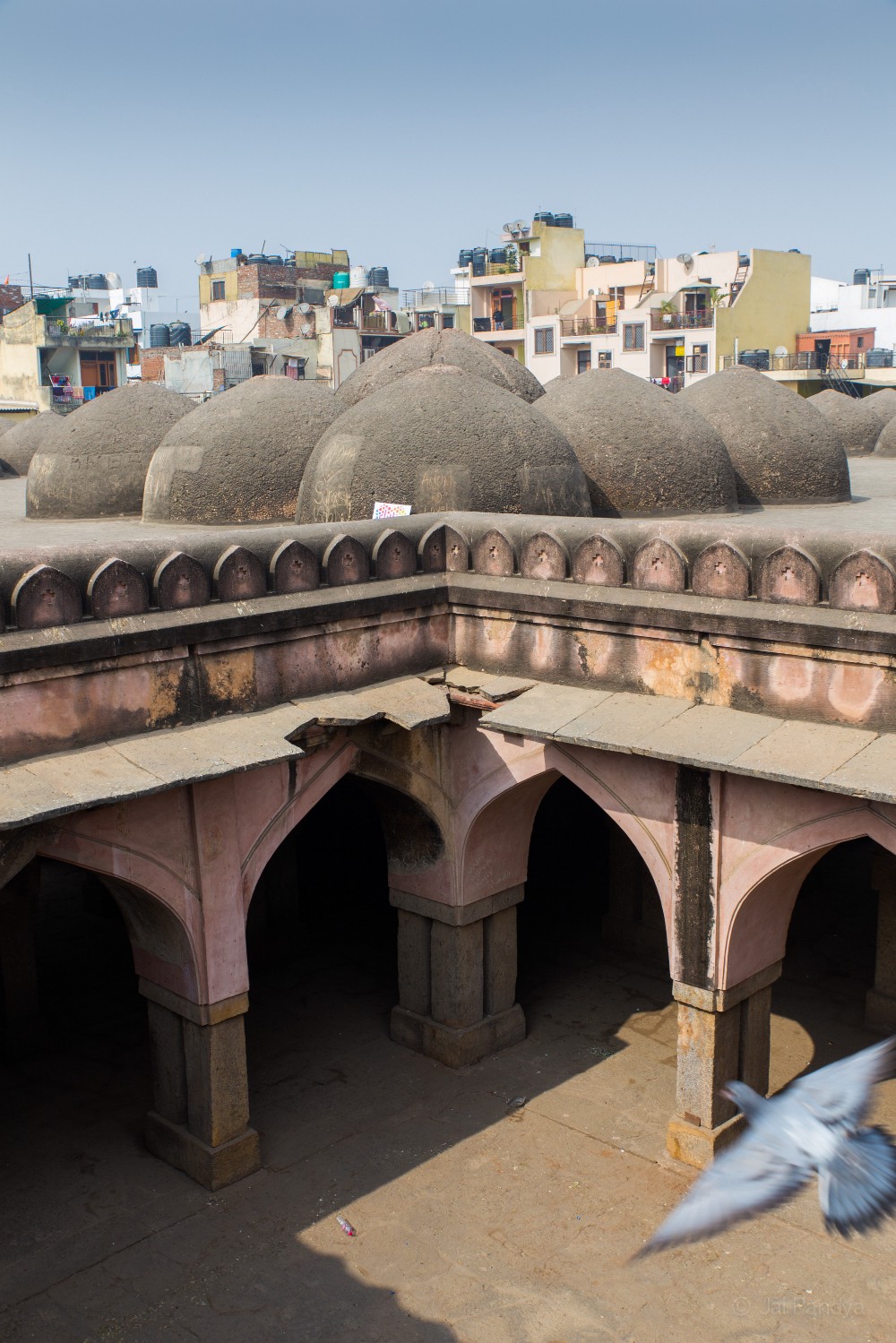 A pigeon flying across the central dome of the Masjid.
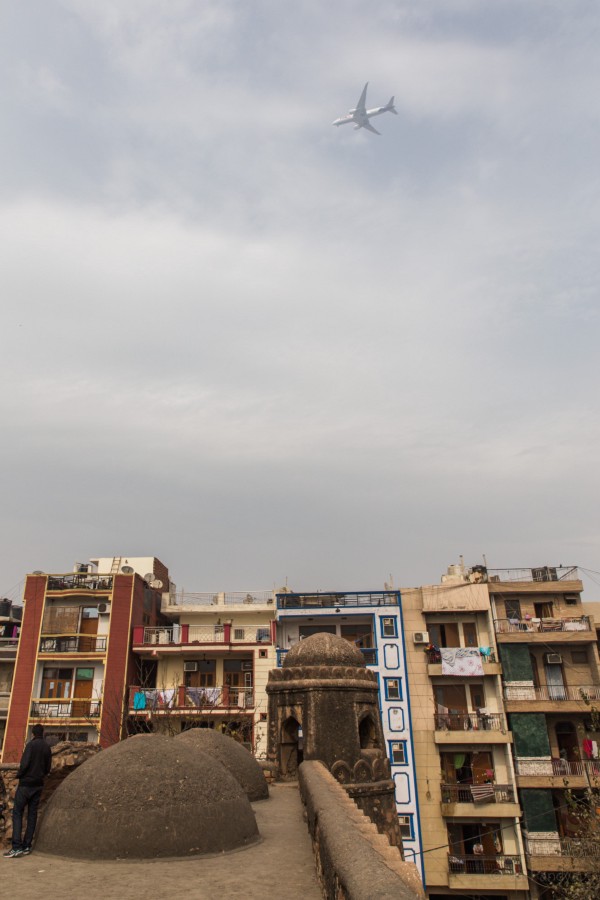
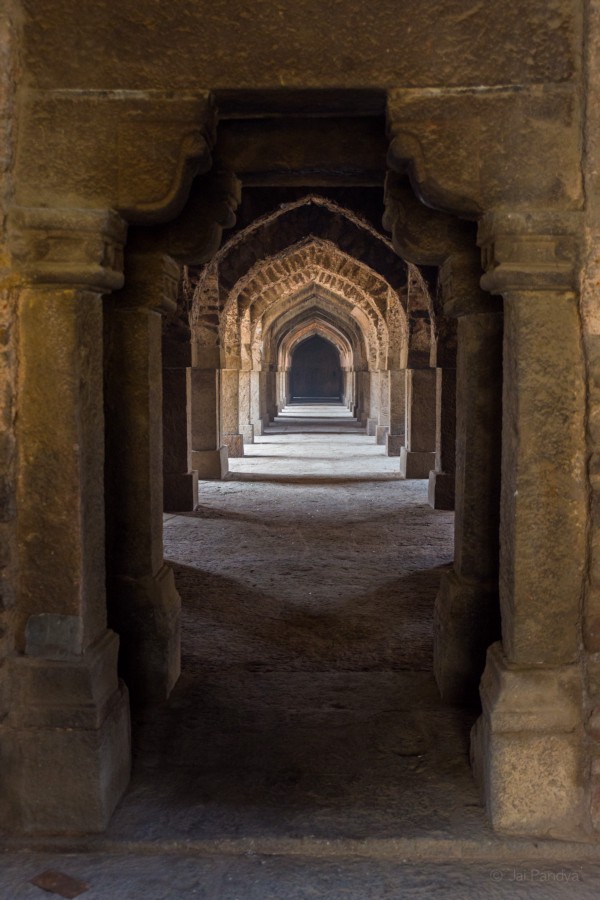 Various shots taken around the Masjid building.
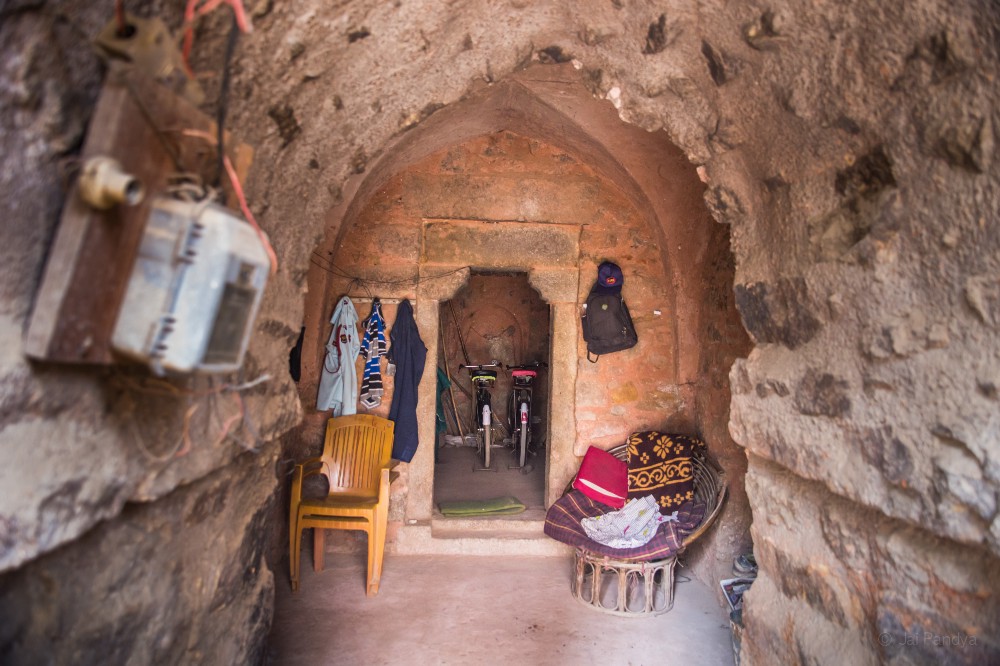 The guards sleep in one of the ground floor chambers of the Masjid. The government has given a contract to a private security agency which employs these guards. The guard present there tells me if the government directly employs them, then it has to give them 50K₹, while through a security agency they only have to spend 10K₹. The choice is obvious.
The walk terminated at Khoj studio from where people dispersed for lunch and later to explore street art in the area. Khoj studio started operating in the year 1997 as an annual workshop. It has now established itself as a not-for-profit, contemporary arts organisation which provides a financial, physical and intellectual space for artists through its various programs. Currently an arts and games exhibition is taking place at the studio where they are showing projects from the game residencies at Khoj.
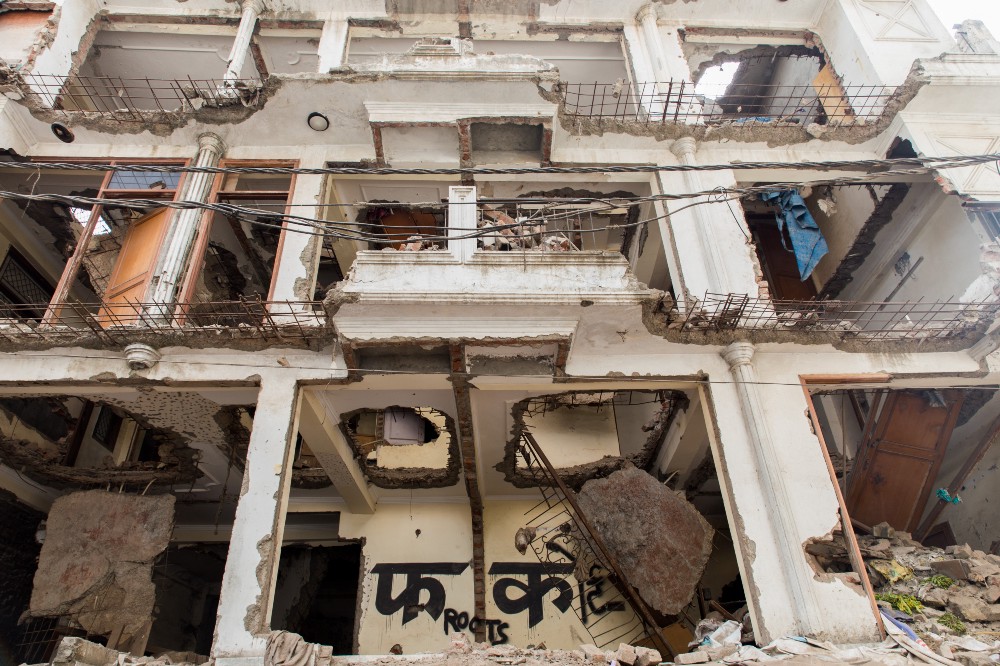 A building dismantled for reconstruction in front of Khoj Studio. The graffiti on the wall is bound to happen in such a case.
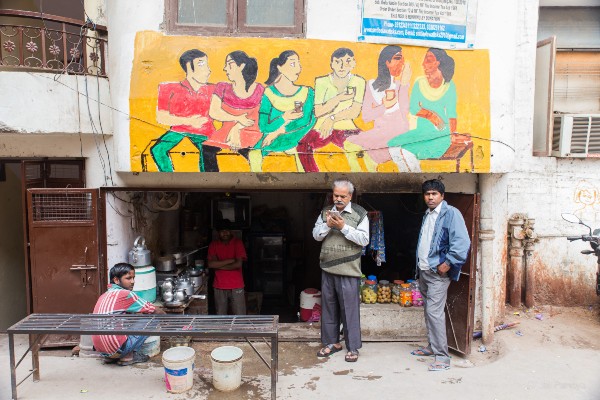
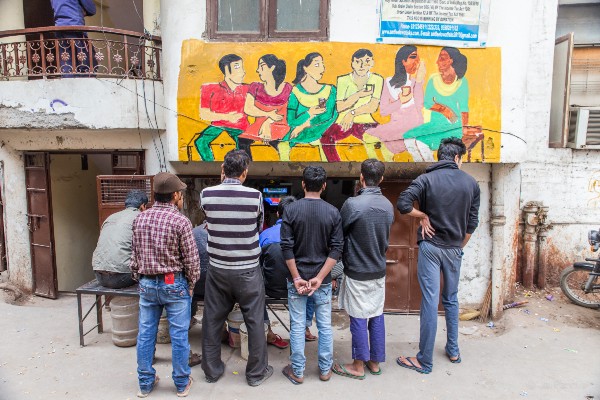 Streets of Khirki would always amaze you. The two shots are from a local chai shop ‘before’ and ‘during’ an India — Australia t20 match. And again, who are those girls?